Even the best athletes in the world are often guessing. Guessing how hard to train, how well they're recovering and whether what they're doing is actually working. Anatomy of an Athlete is a five-episode BSc documentary that puts eight elite Australians through real sports science testing to find out what high performance actually looks like from the inside out.
What Elite Athlete Training Science Actually Looks Like. We Found Out.
Here's something most people don't know: even the best athletes in the world are often guessing.
Guessing how hard to push. Guessing how well they're recovering. Guessing whether what they're doing is actually building them, or just making them tired.
We wanted to change that.
So we spent time with eight of Australia's elite athletes across Olympic lifting, Rugby Sevens, triathlon and surfing. We put them in labs. We ran tests. Their bodyies told the truth.
What came back was surprising. Even to them.
Your Body Isn't Built Wrong. It's Built Differently.
Olympic weightlifter Kyle Bruce made a point early in the series that sounds simple but changes how you think about training.
There is no single correct way to lift, run or move. Your height, your limb length, the shape of your hips, all of it changes how your body performs best.
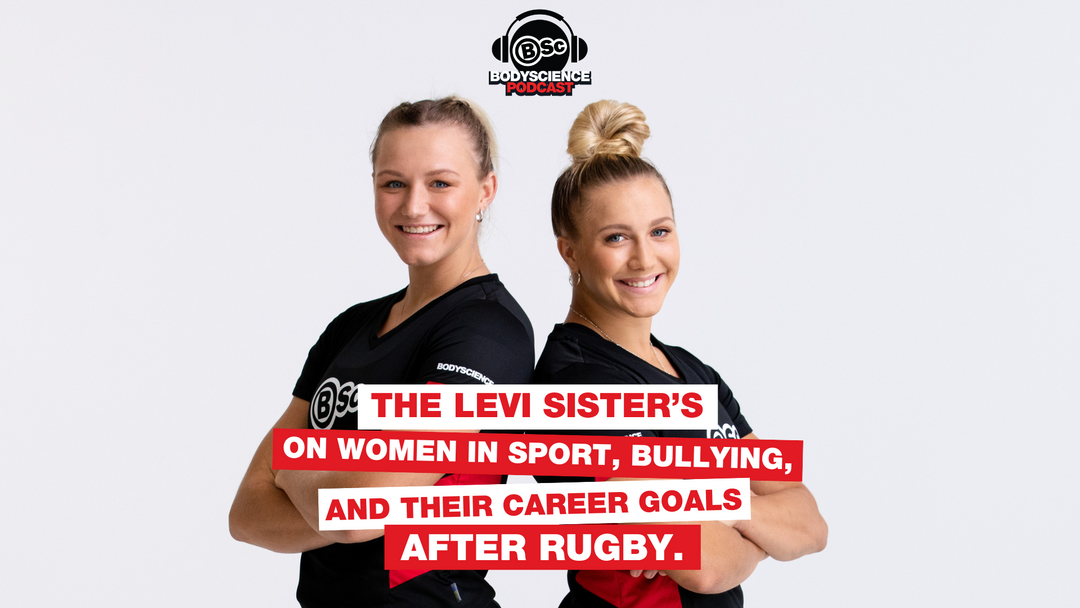
S&C coach Clint Hill demonstrated this with Australian Rugby Sevens sisters Maddi and Teagan Levi, who've trained together their whole careers and move completely differently. Both correct. Both elite.
The lesson: stop copying someone else's movement pattern. Start training yours.
What Body Composition Testing Actually Reveals
At Griffith University, exercise scientist Dan Ferris put eight athletes through DEXA scanning, VO2 max testing and explosive power measurement in a single day.
Most expected different results than what came back.
Several discovered left and right-side muscle imbalances they'd never noticed, the kind that quietly accumulate injury risk over time without ever producing an obvious symptom.
One finding stood out consistently across the group: dropping below an optimal body composition range doesn't make you more athletic. For contact and power sport athletes, extreme leanness increases injury risk. The goal isn't to be as lean as possible. It's to be optimal for your sport. Those are two different targets, and most people are chasing the wrong one.
Why Going Easier Made This Triathlete Faster
Super sprint triathlete Lachlan Jones spent years training hard and by feel.
His first blood lactate test changed how he trains entirely.
Most of his sessions were sitting in the grey zone between his two lactate thresholds. Too hard to build his aerobic base effectively. Not hard enough to push his ceiling. He was working harder than he needed to and getting less out of it than he should have been.
Going genuinely easier in the majority of sessions would build a bigger engine faster. Not because effort doesn't matter, but because the right kind of effort is what actually drives adaptation.
"It's basically leaving the guessing game at home. We know exactly what we need to be doing."
Mental Performance Is a System, Not a Mindset
Olympic surfer Saffi Vette works with stress and performance coach Luke Mathers on the mental side of competition. The key difference at the top level isn't confidence or positive thinking. It's the ability to control your state and make good decisions under pressure.
Saffi runs the same pre-heat system before every competition. Box breathing. Specific mental anchors. A practised trigger. The same sequence every time, so that when conditions are unpredictable, the internal environment isn't.
"I've worked just as hard as anybody else. I deserve to be here."
That's not a pep talk. It's a practised tool with a specific function.
Now Take It Further
Over the coming weeks, BSc is breaking down the science from each episode on Instagram.
Clint Hill will show you how to assess your own VO2 max, explosive power and training zones without any specialist equipment. Dan Ferris will explain what your body composition numbers actually mean for your training. Lachlan Jones, Saffi Vette, Luke Mathers and the Levi Sisters will each share the one thing that changed how they perform.
Follow BSc on Instagram so you don't miss it.
And watch the full documentary free on YouTube now.