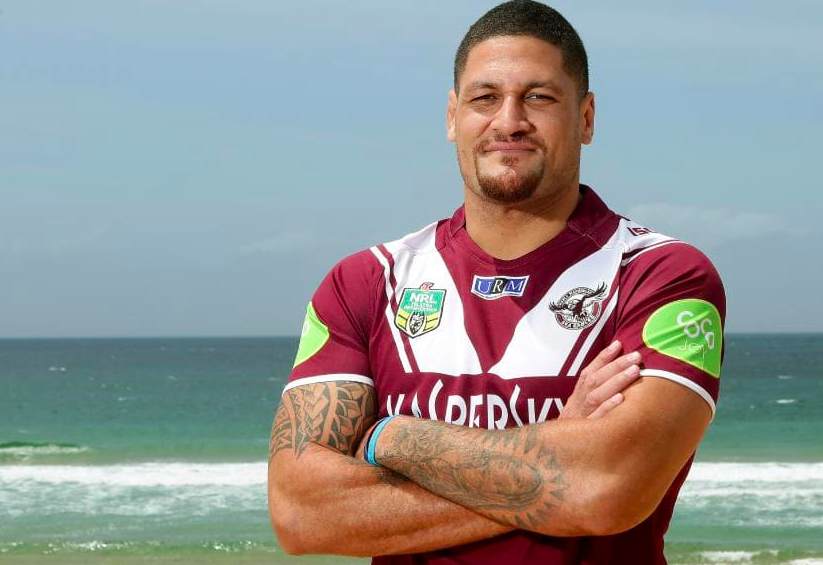
Contact sport is brutal on smaller athletes. NRLW player Layne Morgan competes against players bigger than her every game. The gym isn't about aesthetics. It's about being able to absorb and deliver force against athletes who have a size advantage. Here's how she builds for that, and why game day starts long before kickoff.
I'm Usually One of the Smaller Girls on the Field But If I'm Lifting Their Body Weight, I'm Sweet.
Size is a real variable in contact sports.
It affects how much force you can deliver and how much you can absorb. It affects who wins the tackle, who holds ground and who gets moved. And for an athlete who regularly lines up against players with a significant size advantage, that variable is always in the background.
Layne Morgan plays NRLW for the Parramatta Eels. She's usually one of the smaller players on the field.
Her answer to that isn't to accept the disadvantage. It's to remove it from the gym.
"I think the gym just makes you feel great crossing over onto the field. Makes you feel powerful and confident. I've played sport for a long time, a few injuries have come as well, so making sure I've got some shoulder exercises in there, hamstrings, adductors and some calf things."
The Gym Isn't About Aesthetics. It's About Being Able to Compete.
This is the distinction that separates strength training for contact sports from strength training for everything else.
The goal isn't a body composition outcome. It isn't a strength number achieved in isolation. It's the ability to absorb and deliver force against athletes who have a more natural size and physical presence.
For Layne, gym strength translates directly to performance. If she can lift the body weight of the players she lines up against, the physical disadvantage largely disappears. The size gap gets covered by strength, and strength is something that can be built deliberately, regardless of what the scales say.
That reframe changes what the training looks like and what it's measured against. Not personal records for their own sake. Strength that shows up on the field when contact happens.
Previous Injuries Don't Disappear. They Become the Permanent Maintenance List.
This is something every athlete who's trained seriously for long enough understands.
An injury that's been rehabilitated doesn't leave the body the same way it arrived. It leaves a history. A tissue that's been through damage and repair responds differently to load than one that hasn't. The area is manageable, but it requires consistent attention to stay that way.
Layne's injury history across shoulders, hamstrings, adductors and calves isn't a list of things she's recovered from. It's a permanent maintenance schedule built into every training week.
It's no longer rehab. It's prevention built into the programme permanently.
Shoulders get specific work every session. Hamstrings, adductors and calves are addressed consistently, not reactively. The goal isn't to wait for something to flare up and respond to it. It's to keep those areas resilient enough to handle what contact sports demand of them week after week.
Gym Strength Translates to Field Confidence When It's Built Around Sport Demands
Generic strength programmes build generic strength.
Layne doesn't just lift. She trains in ways that mirror the specific demands of contact, acceleration, and tackling in an NRLW game. The movement patterns in the gym are chosen because they transfer to the movement patterns on the field, not because they're standard programme templates.
Confidence crossing onto the field doesn't come from looking strong. It comes from knowing the body has been prepared for exactly what it's about to face.
That's what sport-specific strength training produces. Not just a stronger athlete in a vacuum. An athlete who moves into contact situations knowing that the preparation has matched the demand.
Game Day Is a System, Not a Feeling
This is where many athletes leave performance on the table.
Game day preparation that runs on feel is game day preparation that varies. Some days, the warm-up goes well, and confidence is high. Other days it doesn't, and the first quarter is spent finding a rhythm that should have been established hours earlier.
Layne's game day is a system. Same sequence. Same timing. Same inputs every time.
Morning of game day: creatine to support power output and BSc Hydrate to start building the hydration buffer early. Not when warm-up starts. Not at kick-off. Hours before.
Pre-match: BSc Pre Workout for focus and output when it counts.
Two occasions. Simple. Consistent. Every game day.
The supplement protocol isn't optional, and it isn't variable. It's the infrastructure that the performance runs on. Remove the decision-making from game day, and what's left is execution.
Why Pre-Loading Electrolytes Matters More Than Most Players Realise
Sweat loss in contact sports is significant and starts accumulating from the first minutes of warm-up.
The problem with trying to replace electrolytes during a game is that it's too late. You can't consume enough fluid and sodium during 80 minutes of contact sport to keep pace with what you're losing. The deficit builds faster than intake can keep up with.
Pre-loading creates a buffer. Starting the day with full electrolyte stores means the body enters the game with a surplus rather than immediately running a deficit from the opening whistle.
Sodium loss in particular matters for contact sports. Fluid balance, nerve-to-muscle signalling and cognitive sharpness all depend on sodium levels staying consistent. When they drop, output drops with them. Not obviously. Gradually. Which is exactly how the second half gets away from athletes who arrived underprepared.
BSc Hydrate delivers 1000mg of sodium, 500mg of potassium and 150mg of magnesium per serve. HASTA Certified every batch, because drug-tested sport demands supplements that carry zero risk on game day or in the testing room.
Relentlessly Ruthless Starts Before You Hit the Field
The physical advantage Layne builds in the gym doesn't show up by accident on game day. Neither does the readiness she brings to the first whistle.
Both are products of a system built around the specific demands of contact sports. Strength that matches what the game asks. Injury prevention that's permanent rather than reactive. Game day preparation that removes variability and replaces it with a consistent protocol.
Size is a variable. Preparation is a choice.