Most people track protein grams. Almost nobody tracks protein quality or efficiency. Two foods can show 30g on the label and perform very differently in the body. Understanding protein density, leucine content and source efficiency is what separates a protein target that looks right on paper from one that actually drives results.
Not All 30g Protein Is Equal. Here's What Actually Matters.
Two foods. Same number on the label. Completely different results in your body.
This is one of the most common blind spots in sports nutrition, and it's why many people hit their protein targets consistently yet still wonder why their progress is slower than expected.
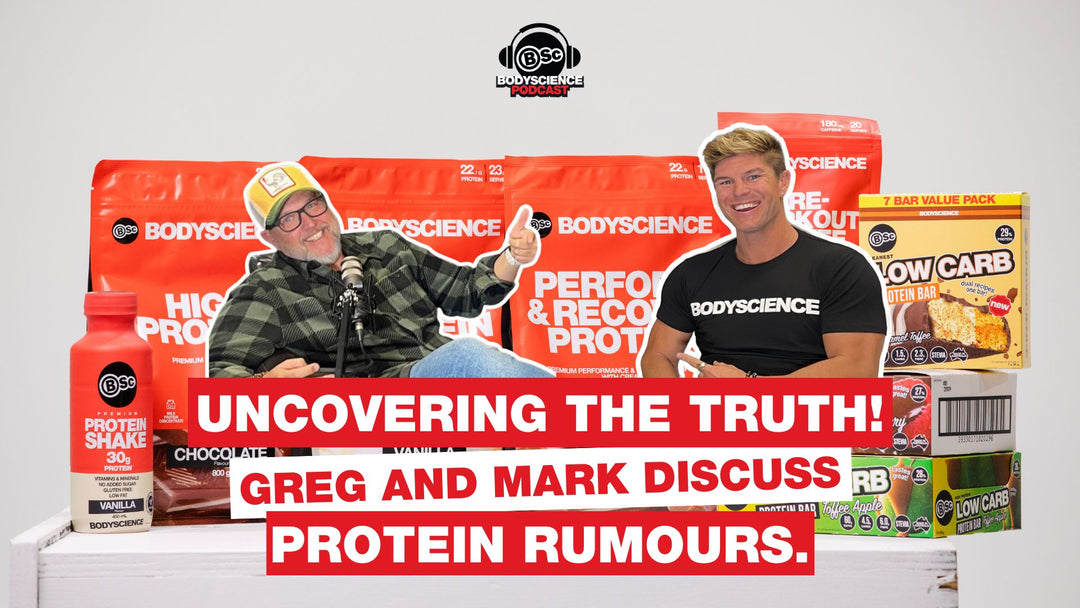
BSc Founder Greg Young has built this principle into the brand since day one.
"Food or shake. Doesn't matter. Total daily protein drives results. But not all protein is created equal, and that's been the founding principle behind BSc from day one."
The gram count is where most people stop. It's not where the conversation ends.
Most People Track Protein. Almost No One Tracks Efficiency.
Hitting your daily gram target is step one. That part matters. Consistent total protein intake is the foundation of muscle repair, recovery and changes in body composition.
But knowing which sources actually work for your body is step two, and most people never get there.
Two things determine whether a protein source is genuinely earning its place in your diet: protein density and leucine content.
Miss either of those, or you can hit your target on paper while quietly underperforming.
One Rule. Any Food. Instant Answer.
There's a simple formula that cuts through label noise and tells you immediately whether a protein source is working hard for you.
Protein (g) × 10 > Calories = Strong source
If the protein grams multiplied by 10 exceed the total calorie count, the source is pulling its weight. If it doesn't, the calories are coming from somewhere else, usually fat or carbohydrate, and the protein is coming along for the ride rather than leading the way.
This rule promotes high protein density, penalises calorie-dense sources, and aligns with both satiety and body composition outcomes. It's a quick filter, not a rigid law, but it tells you more than the gram count alone ever will.
Here's What It Looks Like in Practice
Chicken breast passes. Peanut butter doesn't.
A 150g serve of chicken breast delivers around 30g of protein at approximately 240 calories.
30 × 10 = 300. Greater than 240. Strong source.
Peanut butter, by contrast, delivers protein alongside a significant calorie load from fat. Run the same calculation and it falls well short. That doesn't make peanut butter a bad food. It just means it's not a strong protein source, and counting it as one is where a lot of daily targets quietly come unstuck.
Leucine: The Variable That Determines Whether Protein Becomes Muscle
Protein quantity and protein density matter. But there's a third variable that most tracking overlooks entirely: leucine.
Leucine is the amino acid that triggers muscle protein synthesis, the biological process that actually repairs and rebuilds muscle tissue after training. Research puts the activation threshold at 2 to 3 grams of leucine per serve to maximise this response.
Not all protein sources hit that threshold. Plant-based sources, in particular, often fall short in leucine, which is one reason multi-source blends and supplementation can fill gaps that whole-food intake alone doesn't cover.
Tracking grams without accounting for leucine content is like tracking training sessions without accounting for intensity. The number exists, but the signal it's sending isn't complete.
Powders Win on Efficiency. Food Wins on Everything Else.
This isn't a debate between shakes and meals. It's about understanding when each one earns its place.
Whole foods bring micronutrients, fibre and satiety that powders simply don't replicate. A diet built primarily around protein shakes is missing most of what makes food valuable beyond macros.
At the same time, protein powder wins on efficiency. Calorie for calorie and gram for gram, a quality whey protein is one of the strongest sources available, particularly when convenience matters, and whole food meals aren't immediately on the table.
Use both with intent. Know what each one is doing for you and when it's the right tool.
What Good Protein Actually Looks Like
Three things. In this order.
Total daily intake. Are you consistently hitting your protein target most days, not just when conditions are ideal?
Efficiency. Are your sources passing the protein density test, or are a significant portion of your grams coming from sources that are bringing too many calories along with them?
Leucine. Are you hitting 2 to 3 grams of leucine per serve from your primary protein sources to actually trigger the muscle repair response?
High protein on the label doesn't mean good protein in the body. Most people track the number. The people who get results track what the number is actually made of.
Stop Chasing the Number. Start Choosing the Source.
BSc Whey Protein is built around exactly this standard. A complete amino acid profile, high leucine content per serve, and protein density that passes the efficiency test without question.