Most people learn to lift by watching elite athletes and copying what they see. The problem is that your height, limb length, hip structure and mobility profile are completely different from theirs. There is no universal correct lift. Your structure determines how you squat, pull and move under load. Forcing positions that don't match your anatomy isn't discipline. It's misalignment.
The Problem Isn't Your Form. It's That You're Copying Someone Else's
Most people learn to lift by watching someone who's very good at it and trying to replicate what they see.
That's a reasonable instinct. It's also where a lot of problems start.
Strength and conditioning coach Clint Hill has a clear position on this.
"We adjust the exercises to fit the athlete, not the other way around. Real program design starts with the individual."
The issue isn't that people are trying hard. It's that they're applying a movement model that was built for someone else's body.
Most Lifters Are Copying a Template That Wasn't Built for Them
Watch an elite athlete. Notice their setup. Try to replicate it.
It feels logical. But your body brings a completely different set of variables to the bar:
- Your height and weight
- Your limb length and proportions
- Your hip structure
- Your mobility and stability profile
- Your injury history
Every one of those variables changes how a movement should look for you. And when you force positions that don't account for them, the mismatch doesn't just reduce efficiency. It puts stress on parts of the body that weren't designed to absorb it.
Most People Don't Even Realise They're Doing It
The positions people force most often are the ones that look the most correct on paper.
Upright squats. Narrow stances. Textbook bar paths.
When the body fights those positions, the common response is to assume the problem is a lack of mobility, weak muscles or poor technique. So the lifter keeps drilling the same positions, session after session, looking for the discipline to hold them.
That's not discipline. That's misalignment.
The body isn't fighting the position because it's weak. It's fighting it because the position doesn't fit the structure.
There Is No Universal Correct Lift
This is where biomechanics becomes more useful than aesthetics.
Your structure determines how you squat, how you pull and how you receive the bar. Two people performing the same movement with the same cue and the same weight can look completely different and both can be correct.
A taller lifter who starts in the same position as a shorter lifter will often see their hips rise early as the load increases, shifting stress into the back rather than driving through the legs. The shorter lifter in the same position stays balanced and moves efficiently. Same movement. Same instruction. Completely different outcome.
Same cue. Same weight. Completely different results depending on who's under the bar.
This Is Where It Gets Exposed: Under a Barbell
Olympic lifter Kyle Bruce builds his entire approach around position before load.
"There's only so much weight you can lift with brute force versus quality technique and position."
Seb Oreb echoes the same principle.
"Weightlifters train with high frequency, often daily. It's not that it's light. It's that it's technical."
Olympic lifting makes this visible in a way that other training doesn't. Even the strongest lifter in the world cannot muscle a 200kg clean. The lift requires speed, mobility, timing and efficient positions. Strength only works when it's applied in the right place, through the right structure.
When the structure isn't right, strength becomes the problem, not the solution.
What Happens When Technique Doesn't Match Structure
Efficiency is the obvious cost. But it's not the only one.
When you repeatedly move through positions that don't match your anatomy, the load doesn't disappear. It gets absorbed somewhere else. The tissues handling that misallocated stress, tendons, ligaments, and joint structures - take on more than they should. Rep after rep. Session after session.
Those connective tissues are responsible for force transfer, joint stability and managing the repeated stress that training places on the body. They adapt more slowly than muscle and recover more slowly, too. When the load placed on them consistently exceeds what a good position would allow, the cumulative effect builds quietly over time.
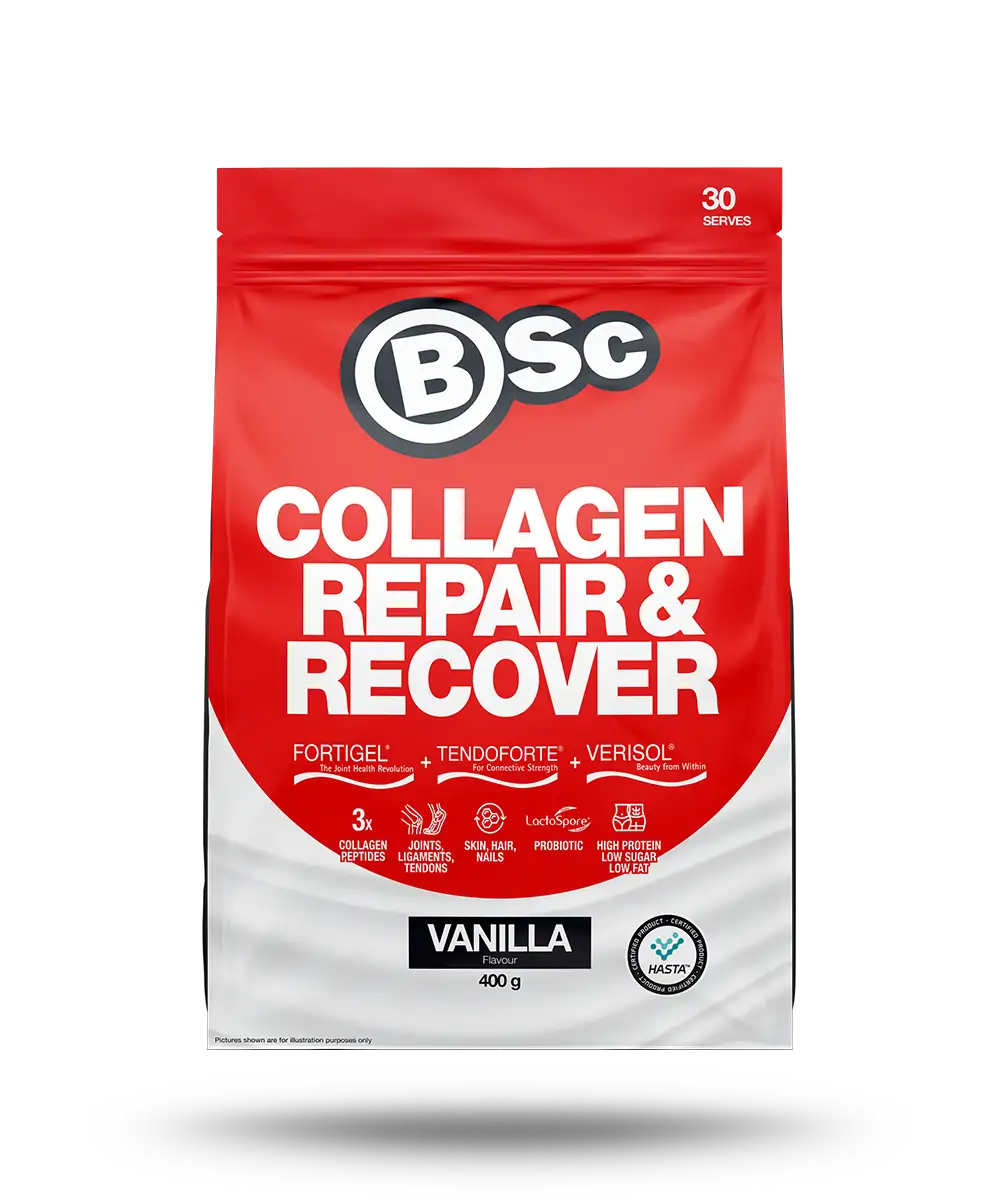
BSc Collagen Repair and Recovery is built to support connective tissue under exactly this kind of load. Bioactive collagen peptides to support the tendons, ligaments and joint structures doing the work, not just the muscles moving the weight.
Train hard. Support what carries the load.
Where to Start
Before adding load, the question worth asking is: where am I forcing the position?
Not where does it look wrong? Where does it feel like the body is working against the movement rather than through it?
From there, the process is straightforward. Adjust the setup to match your structure. Build positions you can repeat consistently under load. Then progress the load.
That sequence, position before load, is where sustainable progress comes from.
Adjust your setup before you add weight. Build positions that belong to your body, not someone else's.
Watch the full documentary here: Anatomy of an Athlete.